Has Safety Reporting Gone Quiet in Your Organisation?
 Rustom Sutaria
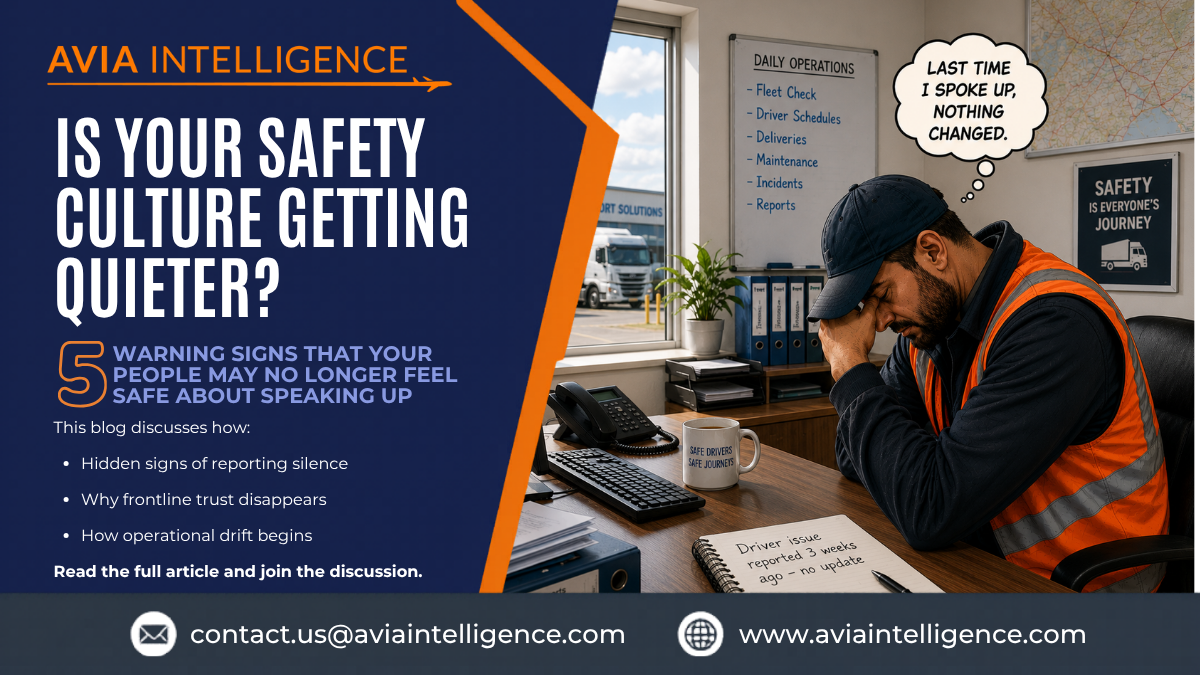
5 warning signs your people may no longer feel safe speaking up
Has Safety Reporting Gone Quiet in Your Organisation?
5 warning signs your people may no longer feel safe speaking up
Most serious safety failures do not begin with catastrophic events.
They begin with silence.
A concern that is never raised.
A shortcut that becomes accepted.
A frontline worker deciding it is easier to stay quiet because “nothing changes anyway.”
At first, these moments appear small. Over time, they shape culture.
In safety-critical transport environments, silence can become one of the greatest hidden operational risks because people often stop speaking up long before leadership notices trust has disappeared.
The Illusion of Safety
Many organisations measure safety culture through:
- Stable reporting numbers
- Positive audit results
- Compliance performance
- Reduced incidents
But fear-based cultures rarely look unsafe on paper.
Operations continue. Targets are met. Compliance appears healthy.
Meanwhile, frontline teams may already be adapting silently instead of reporting openly.
This is where operational drift begins — gradually, quietly, and often invisibly.
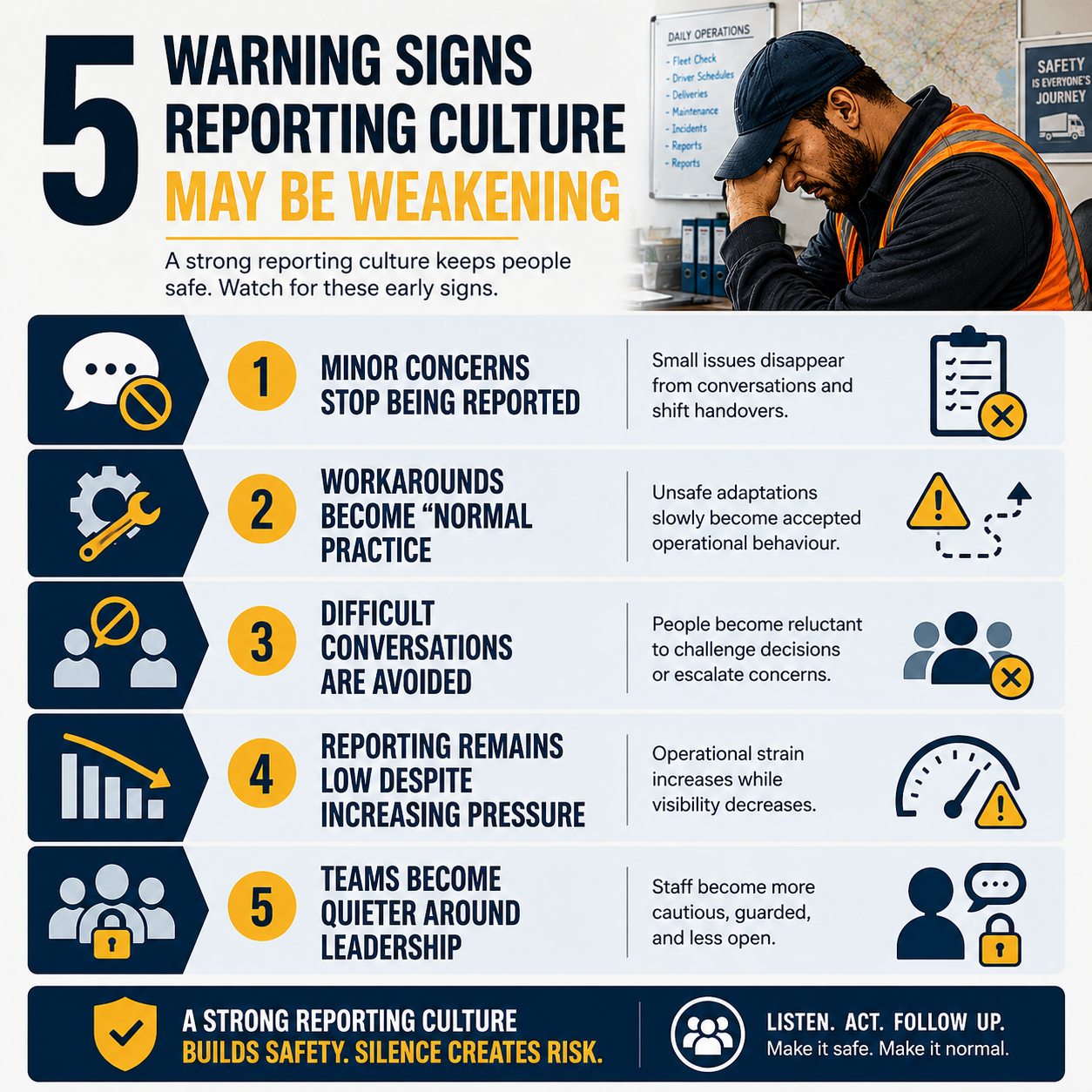
Why This Happens
Frontline workers constantly assess psychological safety.
They observe:
- How leaders respond to mistakes
- Whether reporting creates blame or learning
- Whether concerns lead to improvement
- Whether speaking up carries personal risk
Because culture is not defined by policies or slogans.
It is defined by what people believe happens after they tell the truth.
Reflection
The greatest risk is not always the mistake itself.
The greatest risk is when people decide it feels safer not to report it.
By the time silence becomes visible to leadership, operational drift may already be deeply embedded within the organisation.
Let’s Continue the Conversation
What are you seeing in your organisation? I'd be interested to hear your perspective.
Questions, observations, or a different perspective? I'd be pleased to hear from you.
📧 contact.us@aviaintelligence.com
Stronger reporting cultures create stronger safety outcomes, better operational visibility, and greater trust across frontline teams.
#SafetyCulture #Leadership #TransportSafety #OperationalRisk #PsychologicalSafety