Fear Is the Hidden Threat Inside Many Safety Cultures
 Rustom Sutaria

Compliance can look healthy while operational truth quietly disappears underneath.
Fear Is the Hidden Threat Inside Many Safety Cultures
Compliance can look healthy while operational truth quietly disappears underneath.
You may already sense this in your organisation.
People speak carefully.
Meetings feel controlled.
Concerns arrive too late or sometimes not at all.
From the outside, everything may appear stable. Reporting systems exist. Dashboards look healthy. Policies are current and appear to be effective. Compliance obligations are being met. Yet something feels different beneath the surface.
Fear inside safety culture is rarely dramatic. Most of the time, it looks like professionalism. It appears in hesitation. In carefully chosen language. In the absence of challenge during operational discussions. In the quiet filtering of information before it reaches leadership and that is precisely why fear becomes dangerous.
The Illusion of a Healthy Safety Culture
Many organisations equate visible safety systems with cultural strength.
- Reporting frameworks are in place.
- Training programs are completed.
- Risk registers are updated.
- Investigations are documented.
- Metrics appear positive.
These are important foundations, but systems alone do not create trust.
The presence of reporting activity does not automatically mean people feel psychologically safe enough to speak openly. In some organisations, compliance visibility can unintentionally hide operational silence.
The absence of reported problems does not always mean the absence of risk.
This is one of the most misunderstood realities in modern safety management.
Leaders often assume that if serious concerns existed, they would already know about them. Unfortunately, fear changes how information moves long before leaders recognise the shift.
Your people begin managing exposure rather than contributing openly.
The Operational Reality Leaders Often Miss
When psychological safety weakens, self-protection quietly becomes part of operational behaviour.
- Staff begin filtering information.
- Escalation slows.
- Reporting quality changes.
- Challenge reduces during meetings.
- Difficult conversations become increasingly cautious.
- Weak safety signals disappear before leadership ever sees them.
In many organisations, fear does not eliminate reporting entirely. Instead, it changes the quality, timing, and honesty of communication.
This can appear operationally as:
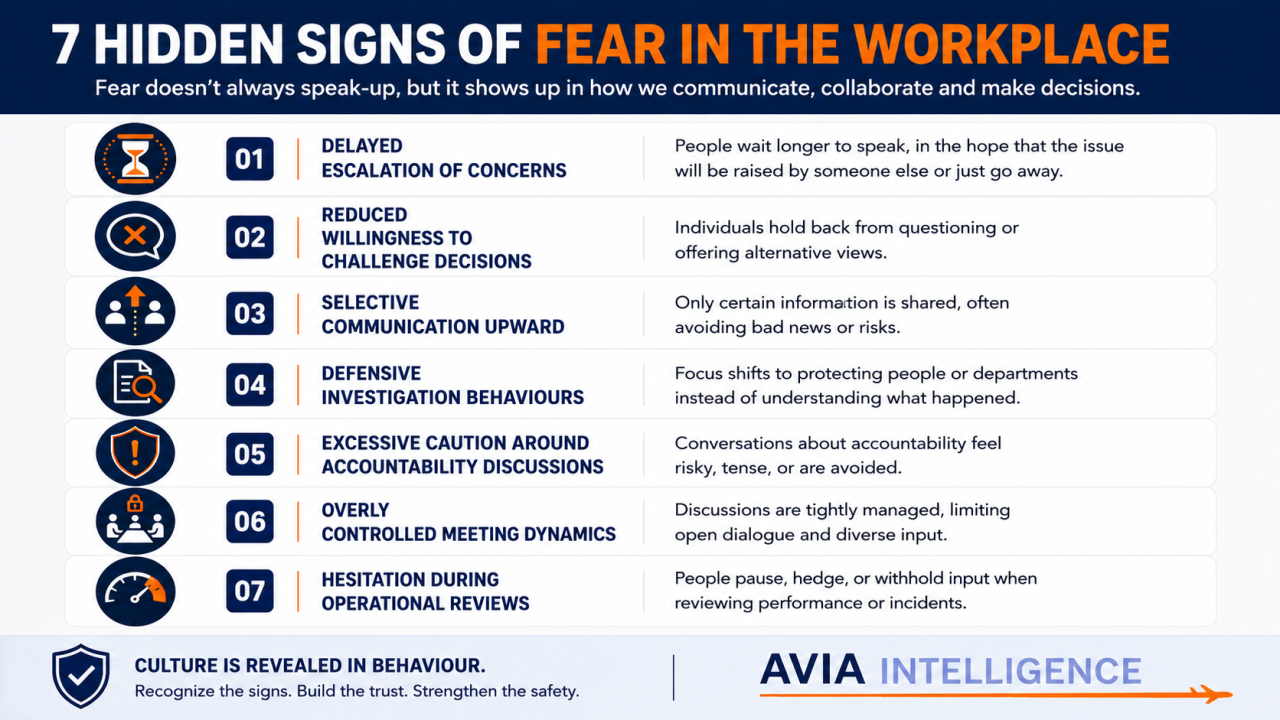
Importantly, this does not mean people no longer care about safety. Often, the opposite is true. People care deeply, but they are also trying to protect themselves professionally, socially or psychologically.
Over time, organisations lose access to operational truth and once operational truth becomes filtered, leadership decisions become increasingly disconnected from frontline reality.
Why Fear Becomes a Serious Safety Risk
Fear damages safety culture quietly before it damages compliance metrics. That is what makes it so difficult to detect. Organisations may continue appearing compliant whilst resilience steadily weakens underneath.
Learning slows because fewer weak signals reach decision-makers early enough. Adaptability declines because people become less willing to expose uncertainty, mistakes, or emerging operational risks.
Small issues remain hidden until consequences force visibility.
The problems leaders know about are rarely the most dangerous. The greater risk often lies in what people no longer believe is safe to discuss openly.
This is where many organisations unintentionally drift toward fragility. Not because systems disappear, but because trust slowly erodes beneath them.
Without trust:
- Reporting becomes selective
- Learning becomes defensive
- Accountability becomes feared
- Operational awareness narrows
- Organisational resilience weakens
The organisation may still appear operationally mature from the outside. Internally, however, silence is slowly replacing learning.
Reframing Safety Leadership
Modern safety leadership requires more than compliance oversight. It requires leaders to understand how culture is experienced operationally by the people doing the work.
High-performing safety organisations increasingly recognise that accountability and learning are not opposites. In fact:
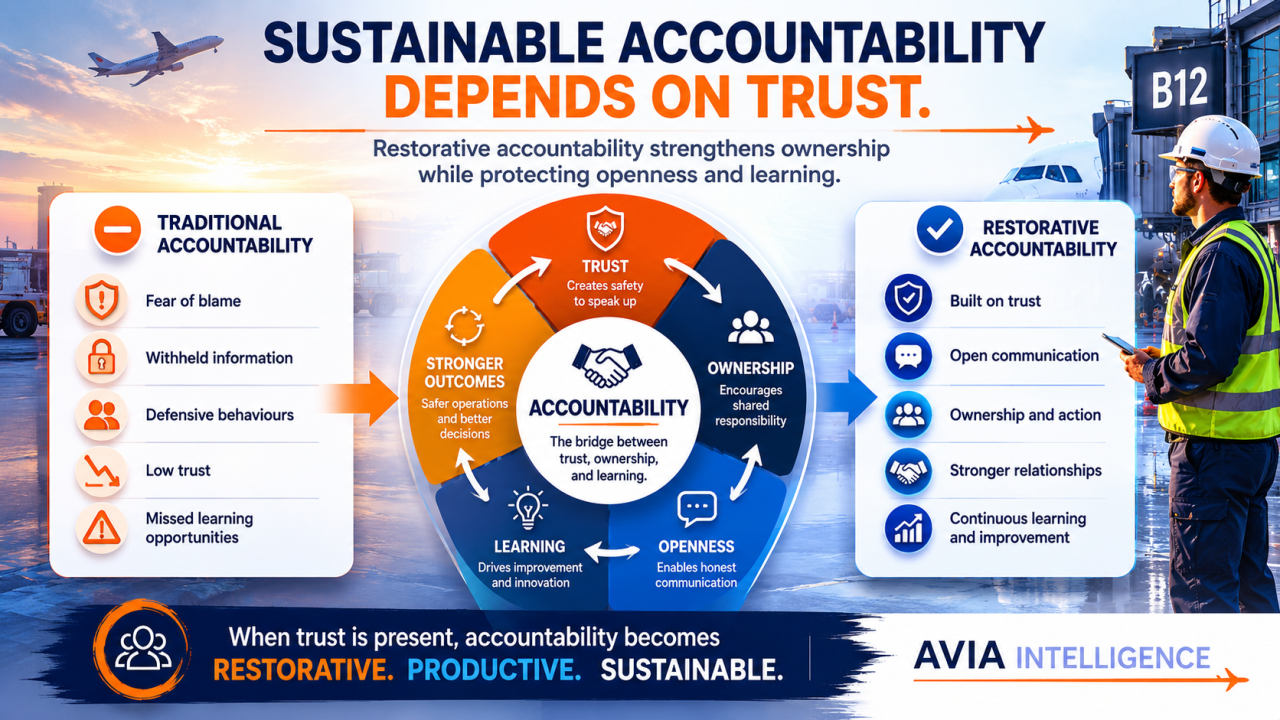
People are far more likely to report early, contribute honestly, and participate constructively when they believe mistakes will be handled fairly and proportionately.
This is where leadership behaviour becomes critical. Trust is not created through slogans, values posters, or awareness campaigns alone.
It is built through daily operational experiences:
- How are you investigations conducted?
- How do you as a leader respond to bad news?
- How are mistakes discussed between you and your team?
- How is pressure operationally managed by you?
- How do you handle respectful disagreement?
- How is fairness demonstrated by you during difficult moments?
Culture is shaped less by what leaders say and more by how people experience leadership under pressure.
That experience determines whether people speak openly or remain silent.
Practical Leadership Insights
Leaders should also examine:
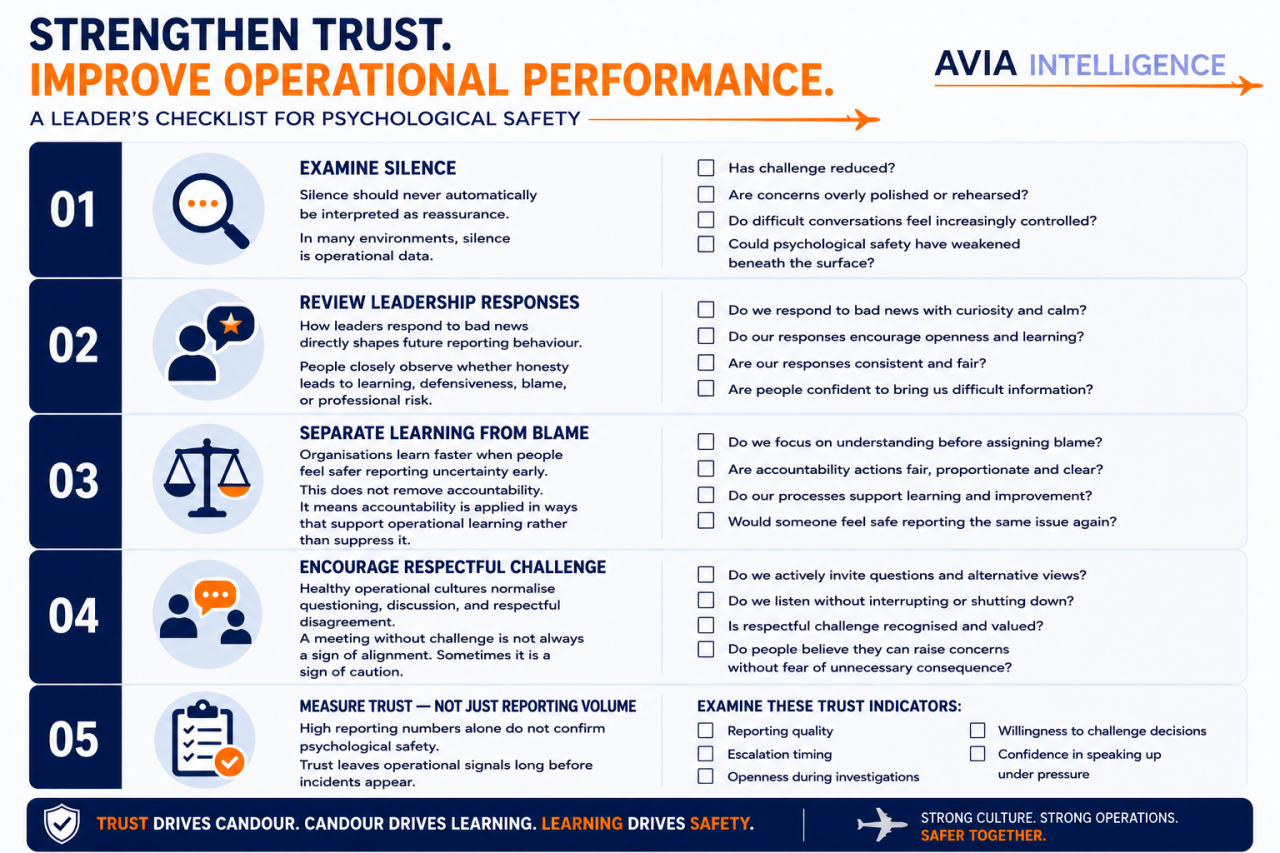
Trust leaves operational signals long before incidents appear.
The Quiet Erosion Leaders Must Notice
Fear rarely destroys safety culture overnight. It erodes it quietly through hesitation, silence, self-protection, and reduced openness.
By the time serious operational consequences emerge, the cultural signals often existed for far longer beneath the surface.
The challenge for leaders is not simply maintaining compliance. It is ensuring people continue to feel safe enough to contribute operational truth, especially under pressure. This is because strong safety cultures are not defined only by systems.
They are defined by whether people trust the environment enough to speak honestly when it matters most.
What operational truths might people in your organisation no longer feel safe enough to share? What are your thoughts.
Sometimes an independent perspective can help uncover opportunities that are difficult to see from inside the system.
Questions, observations, or a different perspective? I'd be pleased to hear from you.