Fatigue & Human Performance | What Leaders Must Do Beyond saying “Be Careful”!!
 Rustom Sutaria
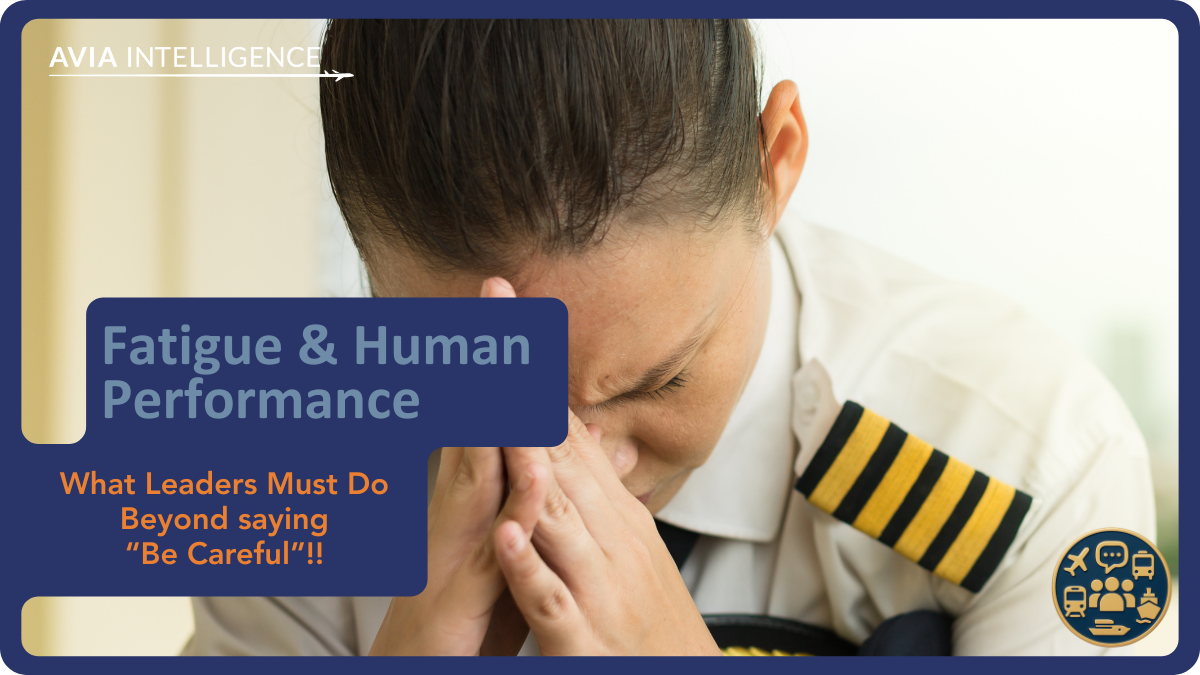
Fatigue risk is not managed by slogans. Leaders need better rostering, sharper supervision and systems that reduce error likelihood under pressure.
Telling people to “be careful” is not a fatigue risk control. It is a mere statement of hope.
Hope is a weak defence when human performance is already being eroded by long shifts, poor recovery, night work, workload spikes and constant operational pressure.
For executives and supervisors, this matters because fatigue is not just about tired people.
It is about degraded judgement, slower thinking, reduced attention, weaker communication, and higher error likelihood. In other words, fatigue risk is not a personal weakness to be managed by individual willpower alone. It is an operational condition that leadership decisions can either worsen or improve!!
This is where many organisations get it wrong. They speak about fatigue in posters and briefings, but ignore the system conditions that create it.
Bad rostering patterns, thin staffing, repeated overtime, unstable shift changes, and pressure to “just get it done” all shape human performance long before the job begins.
Leaders need to move beyond awareness and into planning. That starts with rostering. Rostering should support recovery, not quietly consume it. Back-to-back duties, poorly timed night-shifts, short turnarounds and excessive consecutive working days may look efficient on paper, but they can steadily raise error likelihood in practice.
A legal roster is not always a safe roster.
Supervision also matters.
Good supervision is not policing tired people after the damage is done. It is active monitoring of workload, watching for cues of performance drift, decision quality, and whether teams are being pushed into unsafe trade-offs or work-arounds.
Your supervisors need your authority to slow work down, re-sequence tasks, escalate concerns and challenge even your unrealistic expectations.
Executives set the tone here.
If production pressure always wins, fatigue reporting will stay muted and human performance will suffer in silence. However, if leaders treat fatigue as a real operational risk, people will speak earlier, supervisors will intervene sooner and decisions will become more credible and more sensible.
The question is not whether your people know fatigue is dangerous. They do.
The real question is whether your system makes fatigue more likely, more hidden, or more tolerated than it should be?
That is why fatigue risk management must be practical.
Review rostering patterns. Look at where operational pressure is driving compromise. Empower supervisors to act. Track repeat fatigue hotspots.
Make sure leadership decisions protect human performance rather than simply demand it, because in safety-critical work, “be careful” is not a strategy. Effective planning is!!
If you want to strengthen fatigue risk management effective planning and without adding empty bureaucracy, email contact.us@aviaintelligence.com or join our Zenler community.